My life in limbo

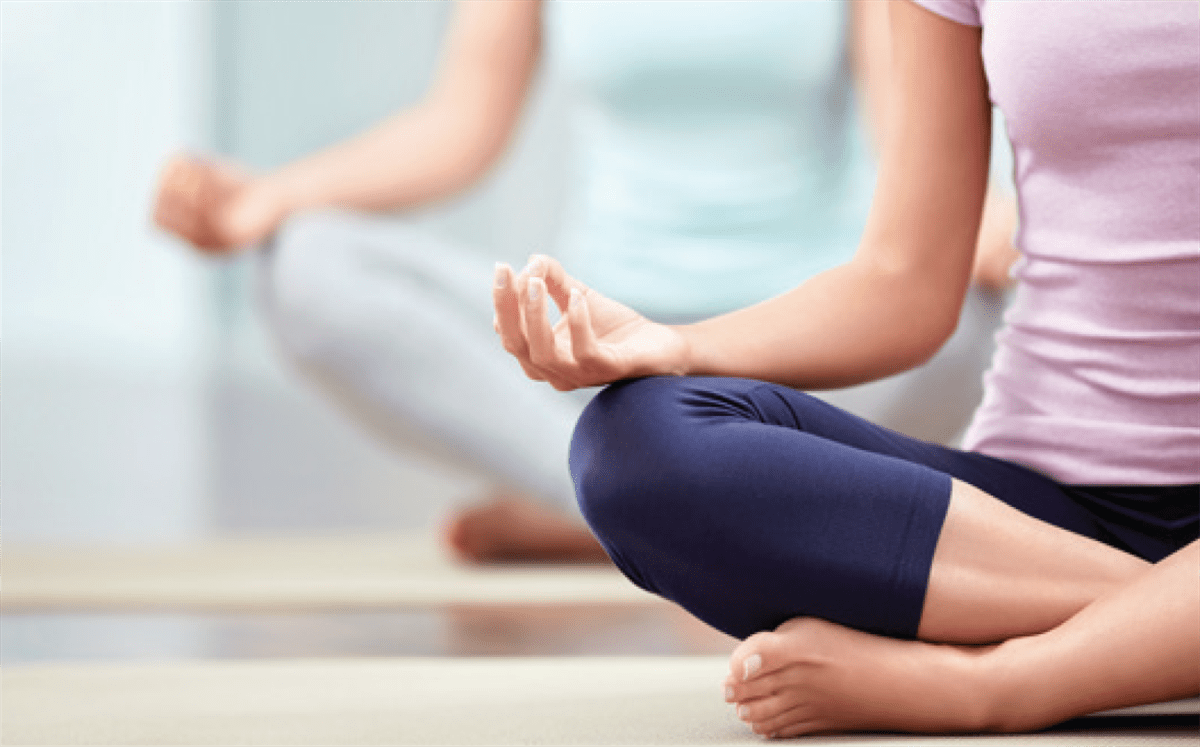
Image by StockSnap from Pixabay

I have recently become widowed. As such my life is in limbo. I have no idea of what to do or how to live my life. My husband was my greatest companion. We pretty much did everything together – yoga, taking the dog for walks, going to the dog-friendly oval for catchups with other dogs and their humans. We liked hanging out together. There was nothing better than spending the weekend ensconced in our readings with beers or glasses of wine, foraging for food every now and again. Even our meals were constructed together. We would always ask each other what we felt like for dinner and then, having decided one of us would cook. More usually it was me, mainly because I enjoyed cooking, but also because I had a larger repertoire and was interested in trying new things. Michael generally stuck to his stock standard Indian meals, which I loved. Now I have to learn how to create them.

At the start of the year we bought a big tent so we could go camping with Mia, our Italian Greyhound. And a bigger car to accommodate the camping gear. It had been a while since we’d gone camping, though it was something we always loved doing. More recently our holidays were in more exotic locations overseas. But a lack of income and a dog meant that holidays now were dog-friendly camping. Then COVID hit and there went camping. The tent stayed in its box in the garage. Then Michael died and every time I look at the tent I feel sad about all the possibilities that are no longer available. I now don’t have anyone to go camping with and I doubt that I will go camping on my own. So the tent needs to be listed for sale. As do so many other things in my home. It’s now “my home”, no longer a shared space despite all the things that belonged to “us” or Michael. Every object reminds me of him and makes me feel bereft. A life gone. I don’t know what to do with all his things. His collection of esoteric books, his wonderful classical music collection, the super expensive blue-tooth headphones that I bought him so he could listen to his music solo (I got tired of saying “honey I’m home – turn off the German music”).

I have no idea of what to do.  It feels too hard to move – so many things. And it feels strange to stay. I try to keep doing what I have always done but now I do them solo and I don’t have anyone to share them with.  It feels strange.  A life half-lived.

This wondering life

I have a hankering to write about things.  Random things that come to me such as my frustration with traffic not obeying my rules and making it impossible for me to get somewhere on time, or my absolute delight at seeing an art exhibition that leaves me feeling joyful and inspired. Awed, thwarted, amused or just frustrated, I want to share my musings and reflections to convey a sense of just how wondrous and crazy life can be.

Food and wine are my greatest pleasures. I think about food all the time, mainly what I would like to eat/cook. My greatest joy is coming home at the end of the day, pouring a glass of wine and starting to cook. When I go away on holidays and have to eat out three times a day, I get a bit stir crazy. For me, thinking about food, shopping for food and preparing food is as important as eating food. And without the former, life is just not the same.

Travel for me is all about the experiences – discovering new places, people, food, and inevitably, finding my favourite haunts – little local eateries in Paris and Madrid, Kuala Lumpur and Ubud. It’s so delightful to have a ‘go-to’ place where the owners remember you the next time you come, be it the next day or the next year.  Traveling to unfamiliar places is exciting – the anticipation of what’s to come, often not knowing what to expect. Dealing with all the frustrations of travel, things that can (and do) go wrong, is all part of the adventure and excitement. Journeys of discovery – not only of places, but often about myself. So many places to see – so little time.

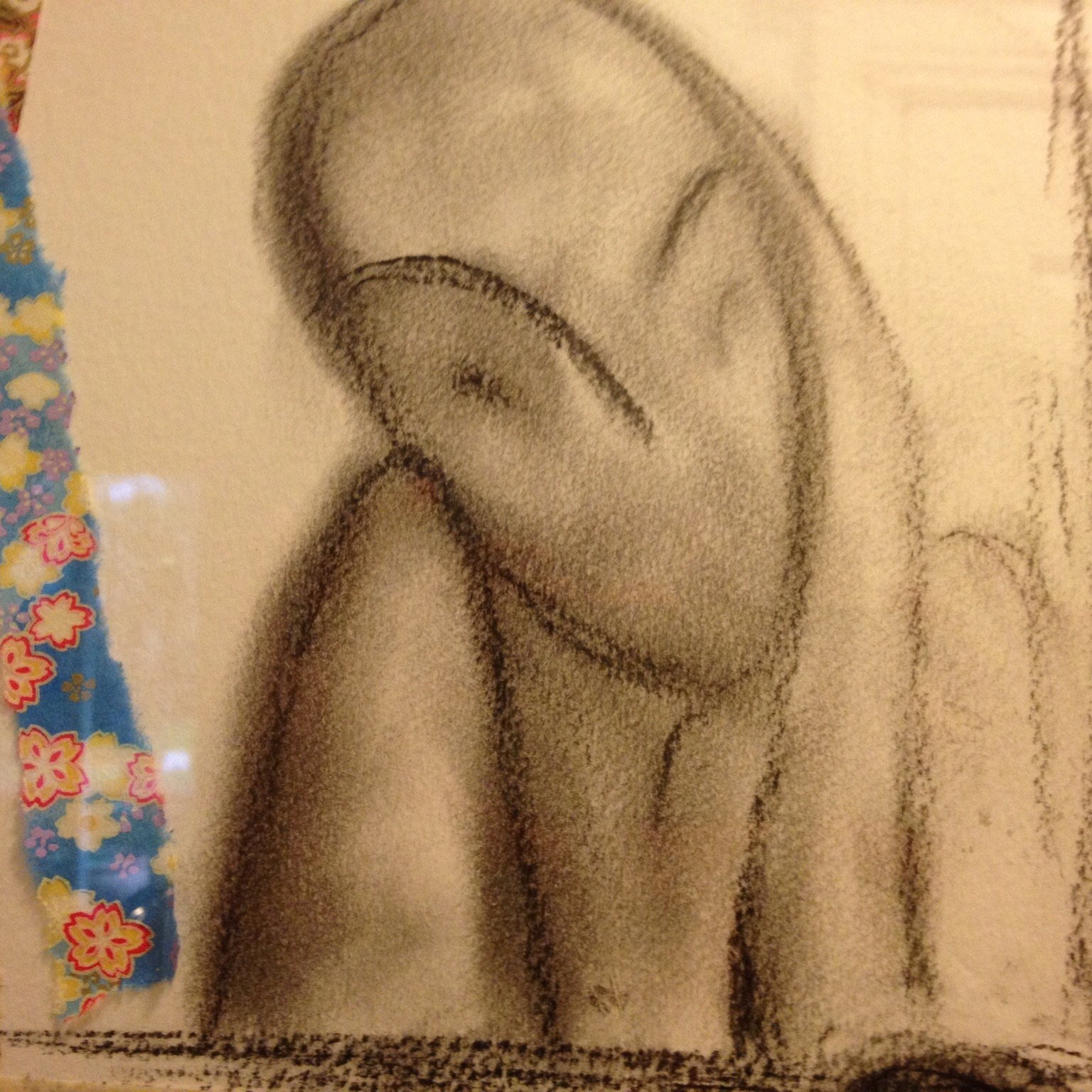
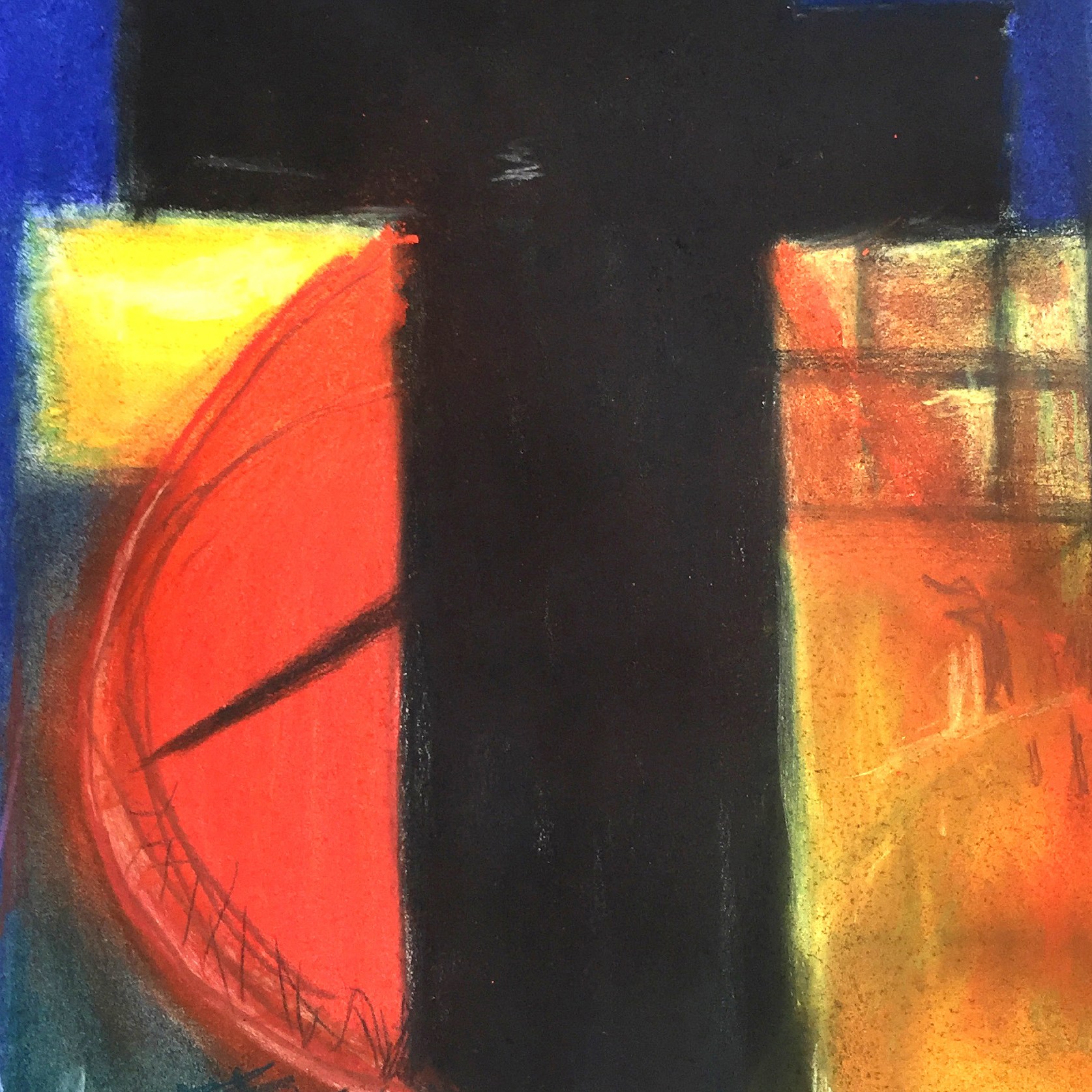
My artwork evolves out of all these experiences – visual, emotional and ever-evolving.  I work in so many mediums I feel like a master of none.  I began my art journey at an art & design college where I majored in sculpture (casting) and printmaking (etching).  From there I discovered my love of art history and went on to complete a number of degrees in visual art.  It was a while before I took up making art again and when I did it was making small clay sculptures that I then cast in concrete and marble (and later bronze).  Only much later did I begin painting.  It was a case of necessity: impossible to find a ground floor studio to cast sculptures and making time for a baby that required vigilant care.  Painting in my garage meant I could easily paint in between feeding, washing, cooking and all those other things that mothers need to do. I was fortunate enough to know and work with some truly remarkable artists whose work and conversations inspired me to be more creative and explore.  I continue to explore – both in terms of my form and style and the mediums that I use.

Creative serendipity

the art of finding what you didn’t know you were looking for

The current trend of tidying up and throwing away is all about creating order and simplifying your life.  De-clutter and your life will be happy. Japanese writer Marie Kondo, author of “The Life-Changing Magic of Tidying Up” (the KonMari method – only keep things that give you joy and fold your underwear origami-style) and more recently “The Gentle Art of Swedish Death Cleaning” by Swedish grandmother, Margareta Magnusson, have been trying to impress on us the need to pare back to make life easier for ourselves and for others.

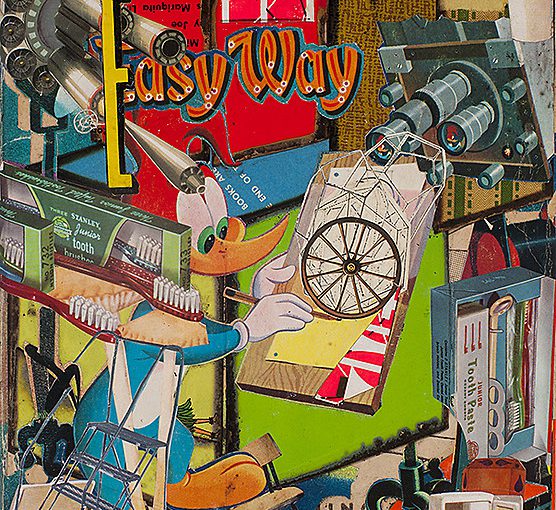
I need to de-clutter. I have a garage full of boxes of things and stuff that are no longer used but perhaps one day will be and often feel a stifling sense of being hemmed in; I have way too many clothes and shoes that I no longer wear and a study full of books, some of which are re-read or picked up or used as reference material; shelves of beautiful art books and art magazines and boxes full of work/teaching material.  Then there are storage boxes full of art-making material: oil paints and mediums, acrylic paints and mediums, gouaches, brushes for all the different types of paints, pastels, charcoals, a printing press, paper (drawing paper, watercolour paper, printmaking paper), printing inks, copper plates, etching tools.  And then there are many small boxes full of bits and pieces, mostly paper, that I have collected and used in my collages including Japanese Chiyogami paper, old letraset sheets (typeface transfers), images cut from magazines, gold leaf, stick-on dots and stars, old rubber stamps.  A wondrous mix of odds and ends.

I’m sure if I had a proper studio things would be better organised and arranged for easy access.  As it is, I rely on having to put things away into large plastic tubs and a variety of boxes once I’m done with a project which does make finding things difficult.  A short while back I spent days looking everywhere for my gouaches and then thinking I must have thrown them out in the last move, went and bought some more only to find my box of gouaches the very next day.

Sometimes though in my searches for things I find visual art pads and sketch pads with collages I’d completely forgotten about, or partly-finished. They often inspire me to do something else.  For collage work it’s often a case of coming across random items and thinking they might work well.  It’s whatever catches your eye and your fancy. Making a collage is all about putting together a range of disparate elements on a page.  There is often no plan, it simply evolves. It’s what I love about working in collage.

American collage artist, Lance Letscher avoids organising his boxes of source material so that he can find unexpected things when he starts searching; he depends on the chaos of stuff, of things lying around. Irving Welsh is also in favour of chaos and deliberately doesn’t organise his music collection:

“I don’t organise my CDs and vinyl by genre or alphabet anymore …. Having it all haphazard means I can never find what I want, but the benefit is that I always find something else, which is cool.  I believe that art is as much about diversion as focus and planning”. In her autobiography Agatha Christie talks about the importance of messiness when re-visiting her chaotic notebooks:

“ [If] I had kept all these things neatly sorted and filed and labelled, it would save me a lot of trouble.  However, it is a pleasure sometimes, when looking vaguely through a pile of old notebooks to find something scribbled down, as Possible plot… with a kind of sketch of a plot.  What it’s all about I can’t remember now; but it often stimulates me, if not to write that identical plot, at least to write something else.”

So by all means, de-clutter and organise, but let’s not forget about the value of creative serendipity.

With acknowledgement to Austin Kleon’s weekly newsletter – a perfect example of randomness and coming across things you didn’t know you were looking for or were interested in.

Yoga and the chanting of mantras

When I first started practising yoga in Sydney it was usual to start and end the class with a collective ‘Om’ which is sounded out as A-U-M – three different sounds with a vibration felt in your throat and then your lips (although in the Hindu tradition its just a very nasal reverberating Oh sound).  It’s a sacred sound and mantra in Hundiusm, Buddhism, Jainism and Skikhism and is traditionally chanted at the beginning and end of yoga sessions. 

It’s a weird thing to do at first – the expelling of breath whilst projecting the sound – you never know how your voice is going to sound out loud and there are always concerns of self-consciousness: “will I sound off-key?” etc.  But it’s a powerful way to connect and at the end of a class its always interesting to experience how much more energy and freedom that mantra emits.  It’s a great way to open and close the practise and gives a tangible sense of connectivity.  Rolling Oms are my favourite: it’s where you just keep chanting Om in your own breath cycle and it creates a beautiful mellifluous sound because everyone’s breath cycle is different.  It also removes the fear that you will start before anyone else.

Having moved to the Sunshine Coast I’ve discovered two lovely yoga studios – one of which incorporated a more elaborate mantra (Shanti Om) which took me a while to figure out (and therefore left me sitting with my discomfort).  But the other studio I joined doesn’t Om.  It struck me one day that there was this sense of incompletion at the end of each session and I realised that what I was missing was chanting this mantra Om.  I asked the yoga teacher who informed me that it was part of studio’s policy (part of their ‘brand’) to not Om.  Why?  Because it might put people who are new to yoga off – make them feel uncomfortable .  She suggested that I could always chant inside my own head.  But that defeats the purpose. Two things struck me as being really strange:

  1. that the yoga studio considered itself a brand; and
  2. the assumption that people couldn’t cope with having to make the Om sound. Conversely it was considered OK to sit with hands in a prayer mudra and all say ‘namaste’ at the end of class.

What gives? 

It led me to think about the business of yoga: what yoga has become/morphed into and how muddle-headed it all is.  On the one hand it’s promoted as the contemporary panacea to all the world’s (individual’s) ills, yet on the other hand it distances itself from the root of its origins as a spiritual practice. 

I have to say, I have had the privilege to be part of what I consider a truly authentic yoga studio and have come across many wonderful yoga teachers, and it is thanks to them that I have been able to develop and deepen my understanding of yoga – physically and beyond.

But I’m not at all certain about the business of yoga.  The yoga studios who set up chains and become a ‘brand’.  What does that mean?  My experience is that they train their staff in a certain way and present their classes in a certain way (despite each yoga teacher having their own personal style, it remains very formulaic) and are not really interested in their community unless it benefits them.  That sounds cynical doesn’t it?  It is.  And I hate that I’ve become cynical.  But I also hate the imposition of a certain way of being that is purported to be either ‘zen’ or ‘yoga’ that really has nothing to do with what yoga is about.  A lack of authenticity.

So I’m curious:  to Om or not to Om?

Modernism in Queensland

In a post-post-modernist world, how many people are familiar with the amazing accomplishments of the modernists?  They were the pioneers of colour, form, daring simple styles and subject matter previously deemed unworthy of artistic endeavour.

I was a bit sceptical about going to see Modernism at Queensland Art Gallery, an exhibition showcasing the work of Georgia O’Keeffe, Grace Cossington-Smith and Margaret Preston.  Putting those three women’s work together seemed a bit like an afterthought – we’ve managed to secure paintings by Georgia O’Keeffe but not enough for a stand-alone show, or curating a show out of whatever’s not recently been seen from the stockroom.  Certainly it seemed odd to show O’Keeffe with the other two Australians – Margaret Preston and Grace Cossington-Smith.

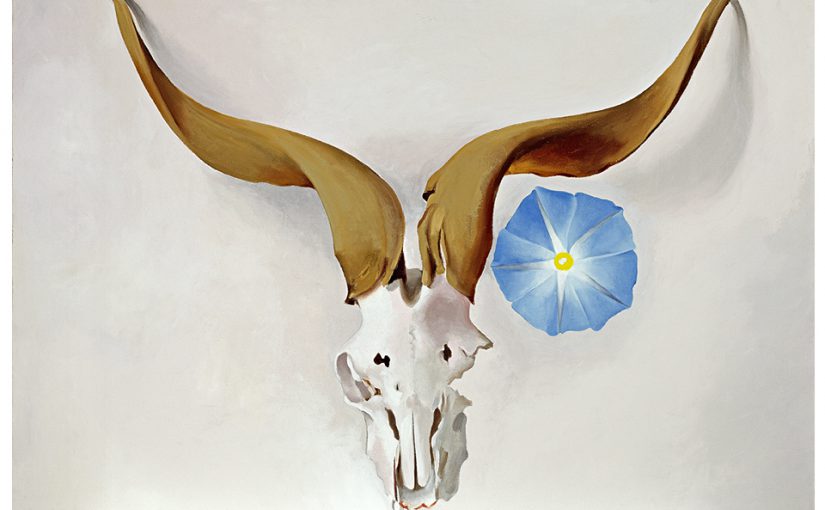
But each artist has transformed traditional still-life into a more vibrant and modern aesthetic.  Georgia O’Keeffe’s paintings fill the canvas with close-ups of magnificent blooms, their bright colours and abstract quality conveying a distinct sensuality. Margaret Preston’s graphic paintings focus on design and pattern and remind me of the early Russian modernists with their focus on constructivism and utilitarian design as well as the still-life paintings of Giorgio Morandi. One of my favourites is a very minimalist painting of a tray of cups Implement Blue (1927), highly stylised and beautiful in its minimalist, industrial design. I love the play of light and use of geometric pattern and colour.  I’m not a fan of Preston’s later work where she appropriates colour and design from a quasi-Aboriginal aesthetic – all these strike me as being works of design rather than landscape painting.

Continue reading “Modernism in Queensland”

David Hockney – a master colourist

I first came across David Hockney’s work through the lithographs of Celia Birtwell, wy back in the 70s when I was an art student studying printmaking. I loved these images, the simplicity of the line work with its subtle wash – stylised but capturing a moment.

On exploring Hockney’s work further I saw an exhibition of his LA Swimming Pool series and again I was struck, not just by the naturalness of the image/subject matter but at the complexity of the structure and composition that made these images so alluring; they were so quintessentially modern.

David Hockney, Portrait of an Artist (Pool with Two Figures), 1972

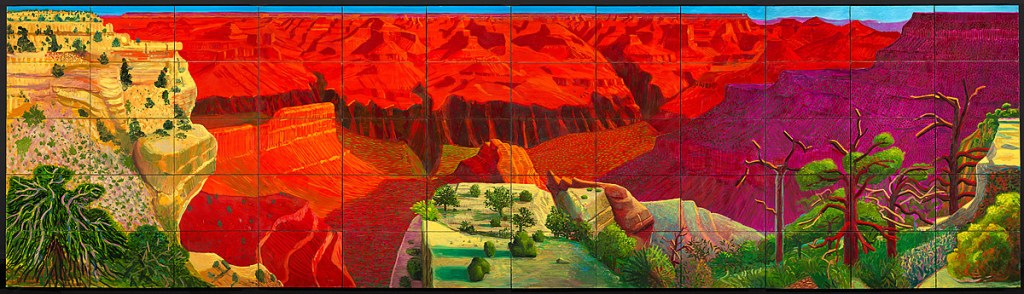
Many decades later I was fortunate to see a wonderful exhibition at the National Gallery of Australia which showcased the work of Dale Chihuly as well as featuring Hockney’s A Bigger Grand Canyon. For me it was one of those ‘wow’ moments. Coming out of the wonderfully curated Chihuly show – which was akin to walking through Aladdin’s Cave – to see this incredibly strange painting consisting of many small canvas boards in the strangest colours was one of the highlights of my art viewing.

What made it so special was a short film that accompanied the work: David Hockney talking about his process in constructing this amazing piece. Not just the footage of him driving his convertible along mountain rides listening to Bach, but also his using photographs of multiple viewpoints and then the process of colour selection. I finally sat down right in front of that painting and it took my breath away. I was able to experience it from so many different point of views (perspectives) that it wasn’t a static image, it was an alive and deeply moving colourful experience. Sadly, the NGA has now hung this masterpiece on a wall over the escalators so that it’s impossible for anyone to really see/view/experience it, or indeed understand what all the fuss is about. I don’t understand why this decision was made as I think it remains of the true great works in the collection.

David Hockney, A Bigger Grand Canyon, 1998

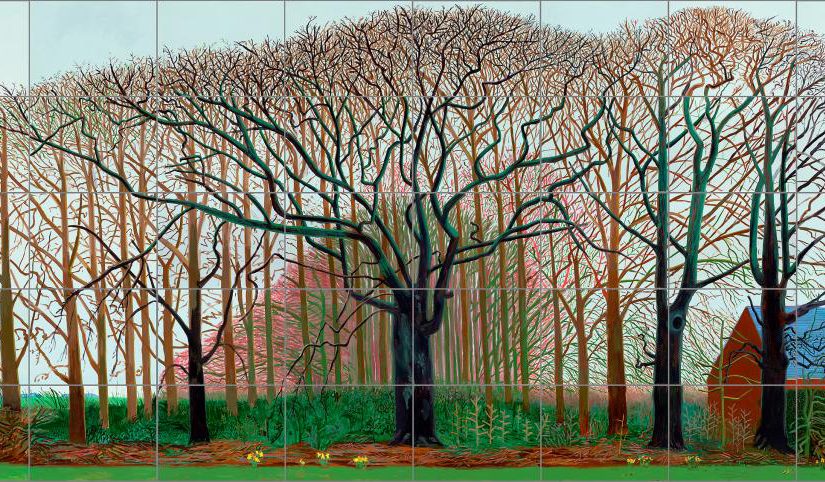
One of Hockney’s ‘tricks’ is to eschew traditional perspective – a fifteenth century construct which is fixed  – and opt for a more subjective view. He sees his objects from multiple perspectives, from many views and many sides and angles and manages to capture the visual experience of being in the presence of the depicted image. Masterful.

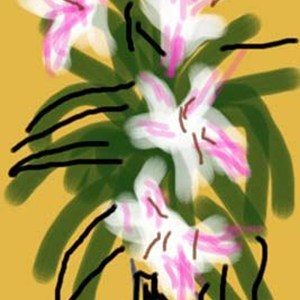
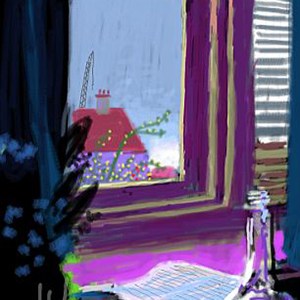
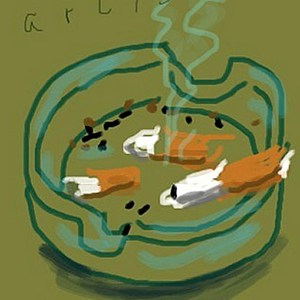
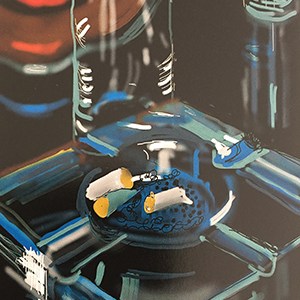
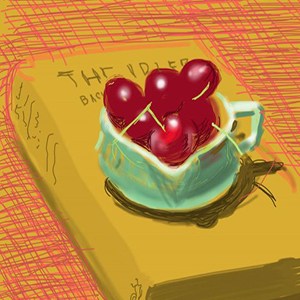
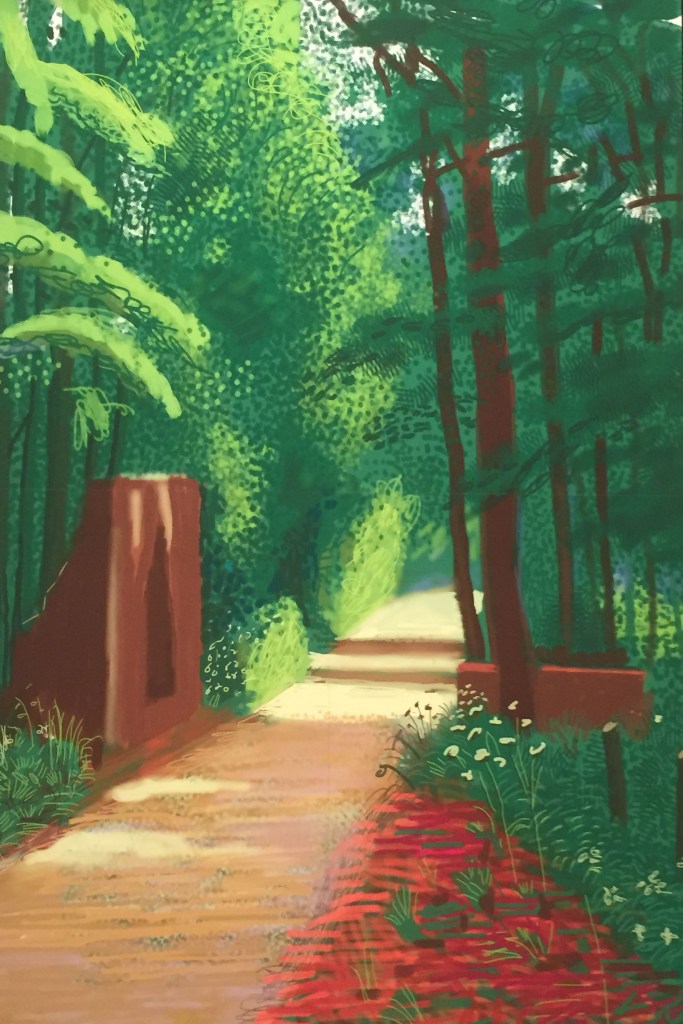
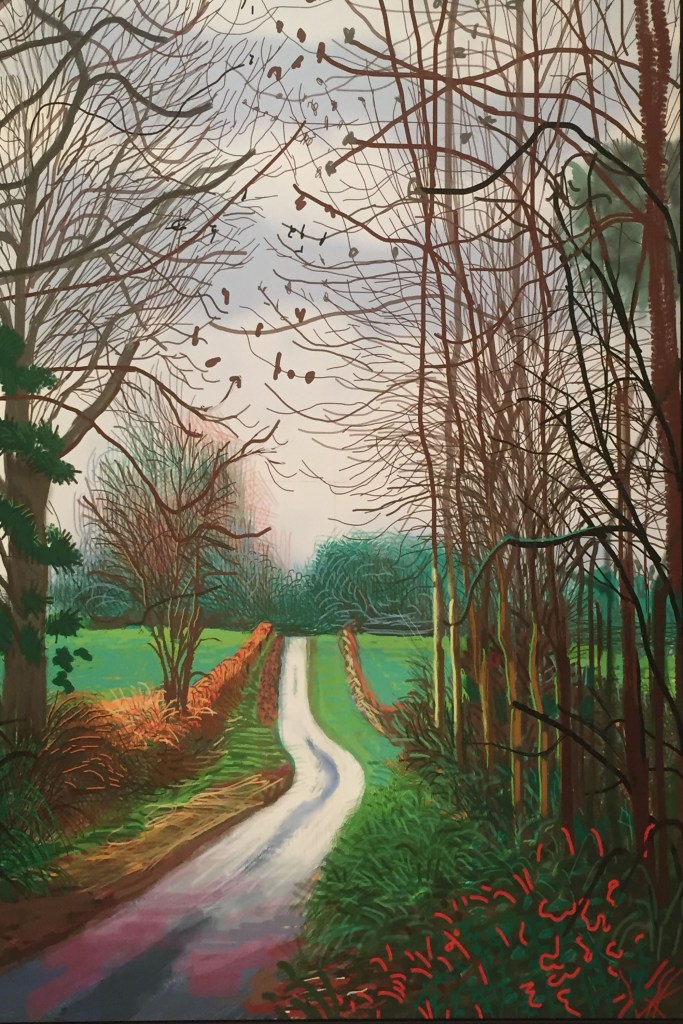
So it was with great anticipation that I wanted to see the NGV’s exhibition of Hockney’s new works: Current. And yet, when I expressed my interest and asked if people wanted to go see it with me, the response was lukewarm: ‘nah’, not really interested. I had talked to a friend who had seen it and she related how impressive the digital/iPhone images were and Hockney’s discussion of his art making on video. I definitely wanted to see this. I had also seen a very short interview with Hockney on SBS about this show and the glimpse of the images impressed me with their bright colour and sheer joyfulness. I was going to see this show.

And so I did. I managed to convince a friend to see it with me – he and I went to uni together to study Art History and although he was sceptical about the show, he was gracious enough to come. I’m extremely pleased to say that he was blown away and thought it one of the best shows he’d seen. Hockney is not just a master of colour he is a master of invention.

Hockney’s use of the iPhone (and then the iPad) to create ‘pictures’ is mesmerising. His use of colour is breathtaking and his skill, well, I think he is one of the greats. And at age 90 he is making inroads and creating works that not only astound but delight. If ‘joy’ was something I had expected to experience, I found it to be so much more than I could ever have contemplated. There were so many ‘wow’ moments in viewing those works; so many mouth-gaping ‘how is that possible?’ that I came away convinced that I had seen one of the greatest shows of the 21st century (second only to an exhibition of Anselm Kieffer that I saw at the Royal Academy of Arts in London).